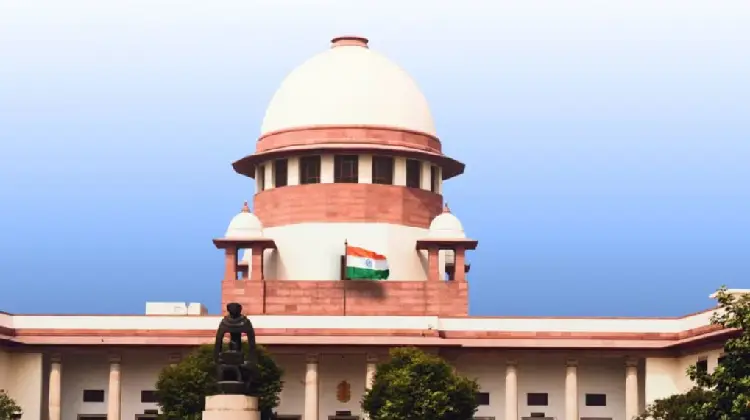
In a significant hearing at the Supreme Court regarding the Goods and Services Tax (GST) applicability on online gaming, senior advocate Harish Salve, representing the E-Gaming Federation (EGF), argued that the current GST rule is a constitutional overreach and a “colourable exercise of power“.
Salve contended before a division bench comprising Justices JB Pardiwala and R. Mahadevan that the GST notifications and show cause notices fundamentally mischaracterize the nature of online gaming platforms. He asserted that these platforms merely act as facilitators and do not supply any transferable rights or claims. “There is no ‘actionable claim’ that arises from participating in a game of skill,” Salve stated, referencing a previous Supreme Court ruling.
The petition also challenges the blanket application of Rule 31A of the CGST Rules, which mandates that the value of a bet in gambling or betting scenarios be considered 100% of the face value. The industry argues that applying this rule to games of skill like rummy, poker, or fantasy sports results in a disproportionate tax burden, as GST is levied not just on the platform’s service fee but on the entire pool of money contributed by players.
Salve emphasized that players compete against each other, with the operators only providing the platform. He questioned whether participation fees in online games constitute “actionable claims” that can be classified as “goods” under the GST regime.
The case, with an estimated financial impact of ₹2.5 lakh crore, is a crucial legal battle for the online gaming industry, which argues that games of skill should not be equated with gambling and betting for tax purposes. The hearing is set to continue on May 14 with Salve continuing his submissions.
Key Highlights:
- Senior advocate Harish Salve argued in the SC that the GST rule on online gaming is a constitutional overreach.
- He stated that online gaming platforms are facilitators, not suppliers of actionable claims.
- The challenge includes the application of Rule 31A, which taxes the entire bet value.
- The industry argues for a distinction between games of skill and gambling for GST.
Double Blow for Real Money Gaming: Govt Enacts PROGA, Hikes GST to 40%
In a twin move that has sent shockwaves through the online gaming industry, the Indian government has enacted the Promotion and Regulation of Online Gaming Act, 2025 (PROGA) and, just weeks later, approved a steep hike in the Goods and Services Tax (GST) rate on online money games from 28% to 40%.
Related stories
More in Content

- Facts checked against primary sources
- Spotted an error? Tell us · How we report